
Learning Outcomes
After studying this lesson, you shall be able to:
- Covalent bonds
- Hydrogen bonds
Covalent Bond
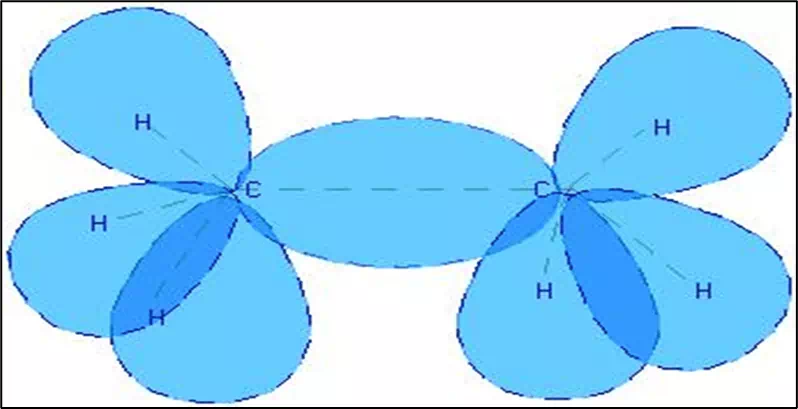
Covalent bonds involve a complete sharing of electrons and occur most commonly between atoms that have partially filled outer shells or energy levels. Thus, if the atoms are similar in negativity then the electrons will be shared. Carbon forms covalent bonds. The electrons are in hybrid orbitals formed by the atoms involved, as in this example: ethane.
Polar Covalent Bond
- These bonds are in between covalent and ionic bonds in which the atoms share electrons, but the electrons spend more time around more electronegative atom.
- This type of bond occurs when the atoms involved differ greatly in electronegativity.
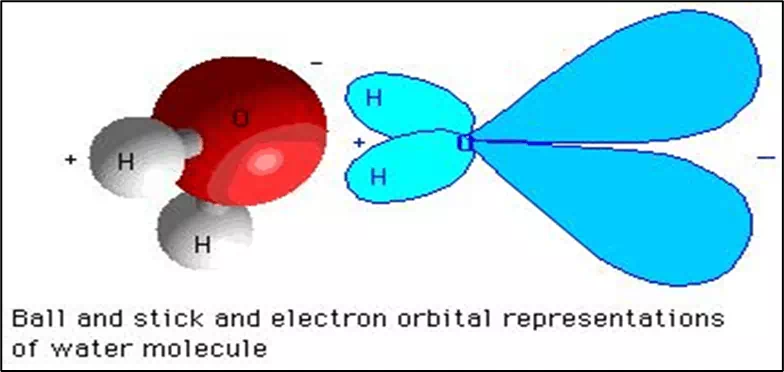
- The most familiar example is water.
- Oxygen is much more electronegative than hydrogen, so the electrons involved in bonding the water molecule spend more time on Oxygen.
- The fact that water is a polar covalently bonded molecule has a number of implications for molecules that are dissolved in water.
- In particular, molecules with polar covalent bonds can break apart when they encounter water molecules.
- They are broken apart because of the electrical attraction between the dissimilar charges of the molecules.
- Also, since ionically bonded molecules involve ions with opposite charges, water with its polar covalent bonds can separate ions from each other and then surround the ions which prevent them from recombining.
Hydrogen Bond
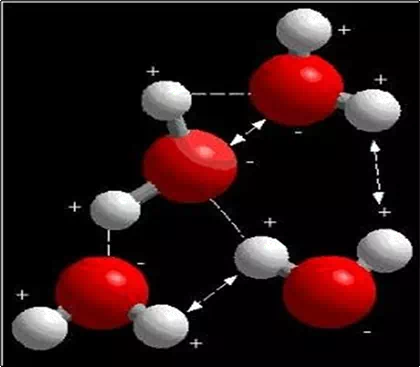
- The fact that the oxygen end of a water molecule is negatively charged, and the hydrogen end positively charged means that the hydrogen of one water molecule can attract the oxygen of its neighbor and vice versa.
- This is because unlike charges attract.
- This largely electrostatic attraction is called a hydrogen bond and is important in determining many important properties of water that make it such an important liquid for living things.
4. Water can also form this type of bond with other polar molecules or ions such as hydrogen or sodium ions.
5. Further, hydrogen bonds can occur within and between other molecules.
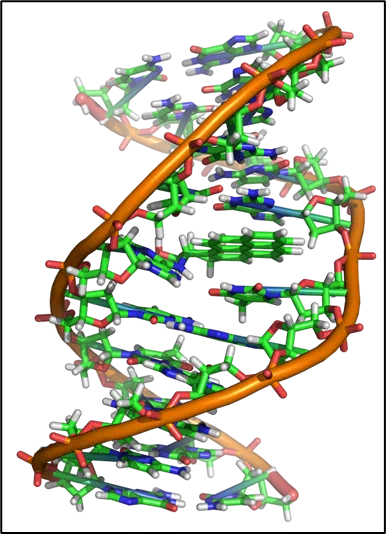
6. For instance, the two strands of a DNA molecule are held together by hydrogen bonds.
7.Hydrogen bonding between water molecules and the amino acids of proteins are involved in maintaining the protein՚s proper shape.
8. This picture represents a small group of water molecules.
9. Hydrogen bonds between unlike charges are shown as lines without arrows on the ends.
10. The double arrowed lines represent the fact that like charges repels each other.
11. Both hydrogen bonds and the repelling forces balance each other and are both important in determining the properties of water.
MCQs
1. Water can make Hydrogen bonds with:
1. Polar molecule
2. Neutral molecule
3. Both
4. None
Answer: A. Polar molecule
2. In which kind of bonds there occurs sharing of electrons:
1. Ionic bonds
2. Covalent bonds
3. Both
4. None
Answer: B. Covalent bonds
# Covalentbonds
# Hydrogenbonds