
Table of Contents
- Introduction
- Atoms and Elements
- Atomic number and atomic mass
- Periodic Table and Chemical Bonds
- Isotopes
- Radioisotopes
- Electronegativity
- Chemical Bond
- Compound, substance, Molecule
- Acidity and Basicity
- Redox Reaction
Learning Outcomes
After studying this lesson, you shall be able to:
- Introduction of Chemistry
Introduction
Chemistry is the science of matter, its chemical reactions, composition, structure andproperties. Chemistry is concerned with atoms and their interactions with other atoms,and particularly with the properties of chemical bonds.
- Chemistry is sometimes called “the central science” because it connects physics with other natural sciences such as geology and biology.
- Chemistry is a branch of physical science but distinct from physics.
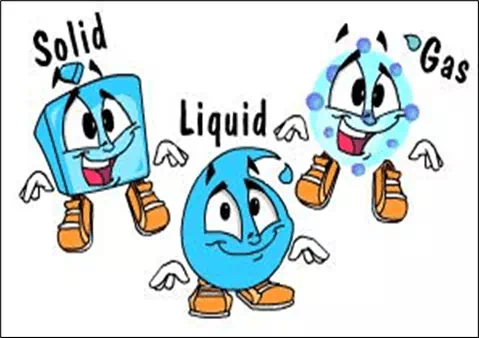
3. Traditional chemistry starts with the study of elementary particles, atoms, molecules,substances, metals, crystals and other aggregates of matter, in solid, liquid, and gas states, whether in isolation or combination.
4. The reaction and transformations that are studied in chemistry are a result of interaction either between different chemical substances or between matter and energy.
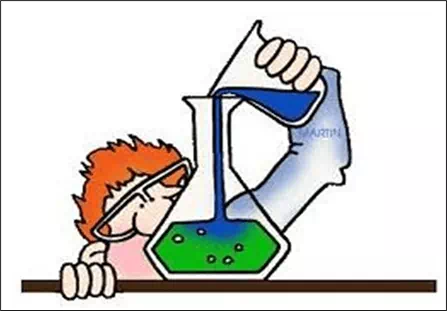
5. Such behaviours are studied in a chemistry laboratory using various forms of laboratory glassware.
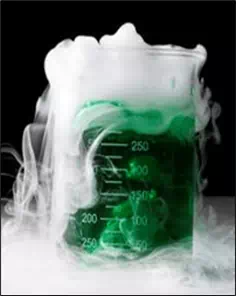
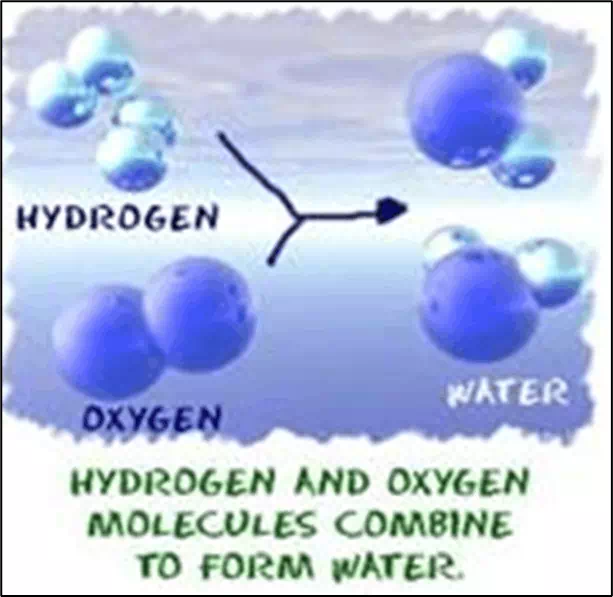
6. A chemical reaction is a transformation of some substances into one or more other substances.
7. It can be symbolically depicted through a chemical equation.
8.The number of atoms on the left and the right in the equation for a chemical trans formation is most often equal.
9.The nature of chemical reactions a substance may undergo, and the energy changes that may accompany it are constrained by certain basic rules, known as chemical laws.
10.Energy and entropy considerations are invariably important in almost all chemical studies.
11.Chemical substances are classified in terms of their structure, phase as well as their chemical compositions.
12. They can be analysed using the tools of chemical analysis, e. g. spectroscopy and chromatography.
13. Scientists engaged in chemical research are known as chemists. Most chemists specialize in one or more sub-disciplines.
Atoms and Elements
An atom is the basic unit of chemistry. It consists of a positively charged core (the atomic nucleus) which contains protons and neutrons, and which maintains a number of electrons to balance the positive charge in the nucleus.
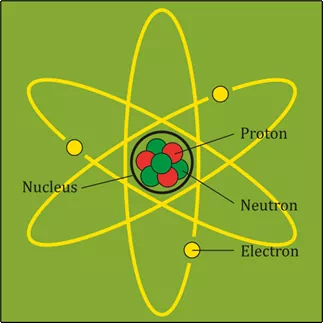
The atom is also the smallest entity that can be envisaged to retain the chemical properties of the element, such as electronegativity, ionization potential, preferred oxidation state (s), coordination number, and preferred types of bonds to form (e. g. , metallic, ionic,covalent) .
MCQs
1. Chemical reactions can be analyzed by
1. Spectrometer
2. Odometer
3. Tachometer
4. Speedometer
Answer: A. Spectrometer
2. Scientists engaged in chemical research are known as
1. Physicist
2. Biologist
3. Chemist
4. Astronomer
Answer: C. Chemist
#Introduction
#atoms and elements