
Class 7: Science Chapter 18 solutions. Complete Class 7 Science Chapter 18 Notes.
NCERT Solutions for 7th Class Science: Chapter 18-Watsewater Story
NCERT 7th Science Chapter 18, class 7 Science Chapter 18 solutions
Exercise
1. Fill in the blanks:
(a) Cleaning of water is a process of removing ____________.
(b) Wastewater released by houses is called ____________.
(c) Dried ____________ is used as manure.
(d) Drains get blocked by ____________ and ____________.
Answer
(a) Cleaning of water is a process of removing pollutants.
(b) Wastewater released by houses is called sewage.
(c) Dried sludge is used as manure.
(d) Drains get blocked by cooking oil and fats.
2. What is sewage? Explain why it is harmful to discharge untreated sewage into rivers or seas.
Wastewater released by houses is called sewage. Untreated sewage should not be discharged untreated into the sea because sewage consists of pollutants and harmful microorganisms which will contaminate water causing disease in people using contaminated water.
3. Why should oils and fats be not released in the drain? Explain.
Answer
Oils and fats should not be released in the drain because drains get blocked by cooking oil and fats.
4. Describe the steps involved in getting clarified water from wastewater.
Answer
Use an aerator from an aquarium to bubble air through the sample in the glass jar. Allow several hours for aeration; leave the aerator attached overnight. If you do not have an aerator, use a mechanical stirrer or a mixer. This reduces the foul smell of wastewater.
Then, the water is filtered through the layers of sand, fine gravel, and medium gravel. Filtration makes the wastewater clean from various types of pollutants. The water is filtered continuously until it becomes clear.
Water is disinfected by using a chlorine tablet.
5. What is sludge? Explain how it is treated.
Answer
Solids like faeces settle at the bottom while treating sewage, and this material is called as sludge. Sludge can be treated as follows
Sludge is removed using a skimmer and then transferred to a tank where it is decomposed by anaerobic bacteria to produce biogas.
6. Untreated human excreta is a health hazard. Explain
Answer
Untreated human excreta is a health hazard because it consists of various disease-causing microorganisms and pollutants that will contaminate the soil and water resource from where people draw water for drinking and domestic purposes. When people use water contaminated with human excreta, they get diseases like Cholera, Typhoid, Dysentry and Hepatitis.
7. Name two chemicals used to disinfect water
Answer
Chlorine and Ozone are used to disinfect water.
8. Explain the function of bar screens in a wastewater treatment plant.
Answer
Bar screen removes large objects like rags, sticks, cans, plastic packets and napkins.
9. Explain the relationship between sanitation and disease.
Answer
Sanitisation and disease are interrelated as lack of sanitisation lead to illness and good sanitisation practices prevent the diseases.
10. Outline your role as an active citizen in relation to sanitation.
Answer
Every citizen has a role to play in maintaining proper sanitisation. Following are the things we should follow to play an active role.
- Ensure that our surroundings are kept clean.
- The sewage system in the house should be properly managed
- Report to the concerned authoritive immediately in case of leakages in sewage pipes.
11. Here is a crossword puzzle: Good luck!
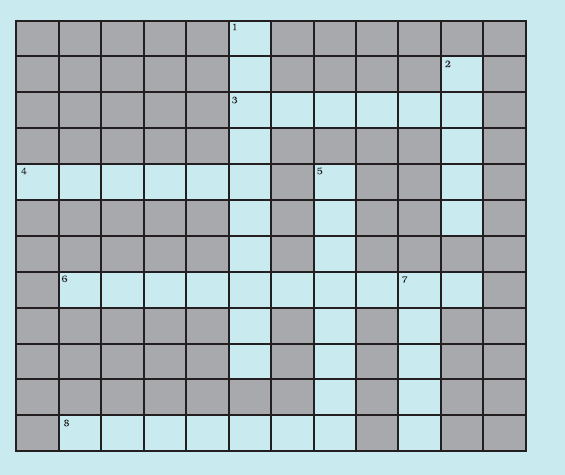
Across
3. Liquid waste products
4. Solid waste extracted in sewage treatment
6. A word related to hygiene
8. Waste matter discharged from human body
Down
1. Used water
2. A pipe carrying sewage
5. Micro-organisms which causes cholera
7. A chemical to disinfect water
Answer
Across
3. Sewage
4. Sludge
6. Sanitation
8. Excreta
Down
1. Wastewater
2. Sewer
5. Bacteria
7. Ozone
12. Study the following statements about ozone:
(a) It is essential for breathing of living organisms.
(b) It is used to disinfect water.
(c) It absorbs ultraviolet rays.
(d) Its proportion in air is about 3%. Which of these statements are correct?
(i) (a), (b) and (c)
(ii) (b) and (c)
(iii) (a) and (d)
(iv) All four
Answer
The answer is (ii) (b) and (c)
NCERT 7th Science Chapter 18, class 7 Science Chapter 18 solutions
NCERT Solutions for 7th Class Science: Chapter 18: Download PDF
NCERT Solutions for 7th Class Science: Chapter 18-Wastewater Story
Download PDF: NCERT Solutions for 7th Class Science: Chapter 18-Wastewater Story PDF
Chapter-wise NCERT Solutions Class 7 Science
About NCERT
The National Council of Educational Research and Training is an autonomous organization of the Government of India which was established in 1961 as a literary, scientific, and charitable Society under the Societies Registration Act. Its headquarters are located at Sri Aurbindo Marg in New Delhi. Visit the Official NCERT website to learn more.